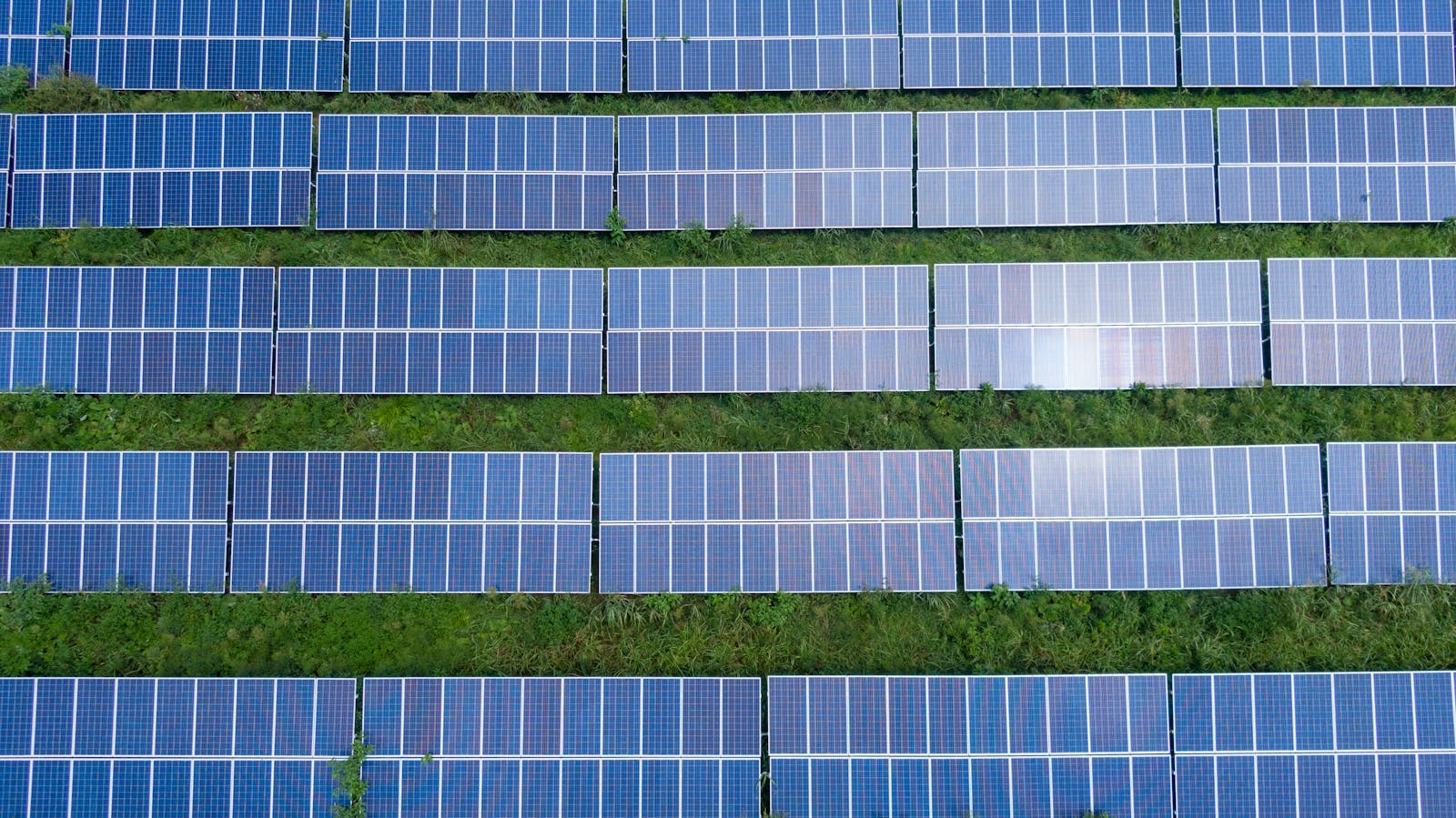
Smart Export Guarantee (SEG)
Get paid for the excess electricity your solar panels generate. Earn money while contributing to a greener UK energy grid.
About the Smart Export Guarantee
The Smart Export Guarantee (SEG) is a government-backed initiative that ensures households and businesses get paid for excess renewable electricity they export to the grid. This scheme replaced the Feed-in Tariff (FiT) and provides ongoing income for solar panel owners.
Key Benefits
Additional Income
Earn money from excess electricity your solar panels generate.
Flexible Rates
Choose from different energy suppliers offering competitive rates.
Smart Monitoring
Track your energy generation and export in real-time.
Environmental Impact
Contribute to the UK's renewable energy goals.
How SEG Works
Eligibility Requirements
- Solar PV system up to 5MW capacity
- MCS certified installation
- Smart meter or export meter installed
- Connected to the grid
Payment Rates
- Rates vary by energy supplier (typically 1-6p per kWh)
- Payments made quarterly or monthly
- Different tariff types available (fixed or variable)
Energy Suppliers
- All major suppliers offer SEG tariffs
- Freedom to choose and switch suppliers
- Different terms and conditions available
Maximizing Your SEG Benefits
- 1
System Optimization
Ensure your solar panel system is sized correctly for optimal generation and export.
- 2
Compare Tariffs
Research different suppliers to find the best SEG rates and terms.
- 3
Smart Usage
Adjust your energy usage patterns to maximize export during peak rate periods.
- 4
Regular Maintenance
Keep your system performing efficiently with routine checks and cleaning.
SEG Income Calculator
| System Size | Annual Export (kWh) | Annual Income (4p/kWh) | Annual Income (6p/kWh) |
|---|---|---|---|
| 3kW | 1,500 | £60 | £90 |
| 4kW | 2,000 | £80 | £120 |
| 5kW | 2,500 | £100 | £150 |
*Actual income may vary based on system performance, usage patterns, and chosen tariff rates.
Check Your Eligibility
Why Choose Us?
- Expert SEG guidance
- Supplier comparison service
- Smart meter installation
- Ongoing support and advice
Start Earning from Your Solar Power
Contact us today to learn how you can benefit from the Smart Export Guarantee scheme.
Check EligibilitySmart Export Guarantee rates 2026: current supplier comparison (reviewed August 2026)
SEG rates are not fixed by the government. Each licensed supplier sets its own price for the surplus electricity you export, and rates move on roughly 30 days' notice — so the only number that matters is the live one on the day you sign up. The table below shows where the well-known suppliers sat in 2026 to help you understand the spread. Treat every figure as indicative and always confirm the live rate before switching.
The headline split is between standalone flat tariffs (you can take these without changing who you buy electricity from) and bundled tariffs (the higher fixed rates that usually require you to be an import customer of the same supplier). A flashy export number bundled with an uncompetitive import tariff can leave you worse off overall — which is exactly why an independent comparison beats a single vendor's pitch. Because we are supplier-neutral, we point you to whoever pays most for your export profile, even when that is not a supplier we work with. Your return is the entire point.
Note that suppliers with 150,000+ domestic customers are obliged to offer at least one SEG tariff, so you always have a baseline option. The cheapest export rate from one of those obliged suppliers is rarely the best deal available — it pays to shop the whole market.
How much can you actually earn? A worked annual-export example
A realistic way to size your SEG income is to start from how much you export, not how much you generate. A typical UK home self-consumes a large share of its solar electricity, so only the surplus earns the export rate. As a rule of thumb, a household with no battery exports roughly half of what a 4kW system generates.
Worked example for a 4kW system generating around 3,400–3,800 kWh a year, exporting about 1,900 kWh:
- At a low flat rate of around 12p/kWh: roughly £228 a year.
- At a strong standalone rate of around 15p/kWh: roughly £285 a year.
- At a bundled fixed rate of around 16.5p/kWh: roughly £315 a year — but only worth it if the paired import tariff is competitive.
These are illustrative, based on indicative 2026 rates, and your real figure depends on roof orientation, occupancy patterns and your chosen tariff. The single biggest lever is self-consumption: a unit you use yourself avoids your import rate (around 26p under the 2026 Ofgem cap), while an exported unit only earns the SEG rate. In practice, a unit kept and used is worth roughly double an exported one — which is why we always advise sizing for your daytime load first, then monetising the genuine surplus.
Battery + SEG: how a smart tariff multiplies your export income
Adding a home battery changes the maths entirely, because it lets you decouple when you generate from when you export or use. Instead of dumping cheap midday surplus to the grid at a flat rate, you can store it and either use it through the evening (avoiding pricey import) or export it during a higher-value window on a time-of-use tariff.
The most powerful pattern combines a cheap overnight import tariff with a daytime export strategy. With an off-peak import window priced around 7–8p/kWh overnight, EV and battery owners can charge cheaply, then self-consume or export by day. A battery paired with the right smart tariff can typically add roughly £350–£600 a year on top of solar-only savings for a representative home — though the exact figure depends heavily on your tariff, battery size and usage, so treat it as a range rather than a promise.
A few caveats keep this honest. Some of the highest time-of-use export tariffs that drove these returns have closed to new customers, and others require import bundling. The principle still holds — store, shift and self-consume — but the specific product you join must be checked live. We model your likely battery payback against current open tariffs before you commit, so the numbers reflect what you can actually sign up for today.
Stacking SEG with grant-funded solar
SEG and solar grants are not alternatives — they work together. A grant (or interest-free loan) helps cover the upfront cost of the panels; SEG then provides ongoing income from the surplus for the life of the system. If your installation is grant-funded, you can usually still register for a SEG tariff afterwards, provided the install is MCS-certified (or covered by an MCS-equivalent scheme) and you have a smart or half-hourly export meter fitted.
How that stacks depends on where you live. In England, schemes such as ECO4 and the Home Upgrade Grant can fully fund suitable measures including solar for eligible households, after which SEG income runs on top. In Scotland, solar PV is supported through an interest-free loan rather than a grant, but exported electricity is still paid under SEG. Wales (via Nest) and Northern Ireland operate their own support routes; note that SEG itself is a Great Britain scheme, and in Northern Ireland export is handled through supplier arrangements rather than the formal SEG.
Eligibility for the upfront funding is the part most people get wrong, because it turns on benefits, EPC rating, heating type and property details rather than the export side. We assess both halves together — what you could qualify for to install, and which export tariff pays best afterwards — so the whole return is captured, not just one piece of it. There is never a guarantee of grant approval, but a free eligibility check is the fastest way to find out where you stand.
| Supplier | Tariff | Approx. rate (p/kWh) | Type | Notes |
| Octopus Energy | Outgoing Octopus (Fixed) | ~12 | Flat / standalone | Sensible default for solar-only homes with no battery; no import bundling required. |
| Good Energy | Solar Savings | ~15 | Flat / standalone | Among the best standalone flat rates without switching import supplier. |
| OVO Energy | OVO SEG | ~12 | Flat / standalone | Straightforward standalone option; verify live rate. |
| E.ON Next | Standard SEG | ~10.5 | Flat / standalone | Lower standalone rate; no import bundling required. |
| E.ON Next | Export (with import bundling) | ~16.5 | Flat / bundled | Among the highest fixed rates, but requires being an E.ON Next import customer. |
| British Gas | Export & Earn Plus | ~15.1 | Flat / bundled | Typically requires being a British Gas import customer. |
| Octopus Energy | Octopus Flux | Time-of-use (historic peak ~29) | Time-of-use / battery | Closed to new sign-ups in 2026; shown to illustrate the time-banded model only. |
Rates are indicative and correct as of 2026 — SEG prices can change on around 30 days' notice. Always check the supplier's live rate before signing up. We act as a free, supplier-neutral broker and will point you to whoever pays most for your export.
Frequently asked questions
What is the best Smart Export Guarantee rate in 2026?
There is no single best rate — it depends on whether you want a standalone tariff or are willing to bundle import and export with one supplier. In 2026, standalone flat rates clustered around 12–15p/kWh, while bundled fixed rates reached roughly 16.5p/kWh for customers who also imported from the same supplier. Some installer-exclusive and time-of-use deals went higher but came with conditions. Always confirm the live rate, as suppliers can change SEG prices on around 30 days' notice.
Do I have to export to the same supplier I buy electricity from?
No. SEG is independent of your import supplier, so you can export to whoever pays most while buying your electricity elsewhere. That said, some of the highest fixed export rates are only offered to a supplier's own import customers, so bundling can occasionally win overall. The right answer depends on your combined import and export cost — which is exactly why comparing the whole picture, rather than chasing a single headline export number, matters.
Does adding a battery increase my SEG payments?
A battery does not raise the rate per kWh, but it lets you control when you export or self-consume, which usually increases your overall return. By storing cheap or surplus electricity and using it at peak times (or exporting on a time-of-use tariff), a battery paired with a smart tariff can typically add around £350–£600 a year for a representative home. The exact figure depends on battery size, tariff and usage, and several high-value time-of-use tariffs have closed to new customers, so check current options before buying.
Can I claim SEG if my solar panels were grant-funded?
Yes, in most cases. A grant or interest-free loan covers the upfront install, and SEG provides ongoing export income afterwards — the two are designed to stack. You will generally need an MCS-certified installation (or an MCS-equivalent scheme) and a smart or half-hourly export meter to register. Eligibility for the upfront funding depends on benefits, EPC rating and property details, so it is worth checking both the grant side and the best export tariff together.
How is SEG different from the old Feed-in Tariff?
The Feed-in Tariff (FiT) closed to new applicants in 2019 and paid both a generation tariff and an export tariff at government-set rates. SEG replaced it and pays only for electricity you export, with rates set by individual suppliers rather than the government. That means SEG rates vary between suppliers and can change, so unlike FiT you should compare offers and review your tariff periodically to make sure you are still getting a competitive export price.