
UK Solar Power Grants & Funding Schemes
Every UK route that can fund or part-fund solar panels, with who runs it and whether it is still open. Solar Power UK Grants is an independent information and enquiry service run by SEO Dons Ltd. We are not the government, a scheme administrator or an installer. We reply by email.
Available UK Solar Power Grants
The UK government offers various grants and schemes to promote solar power adoption and renewable energy sources. Find the right funding option for your situation.
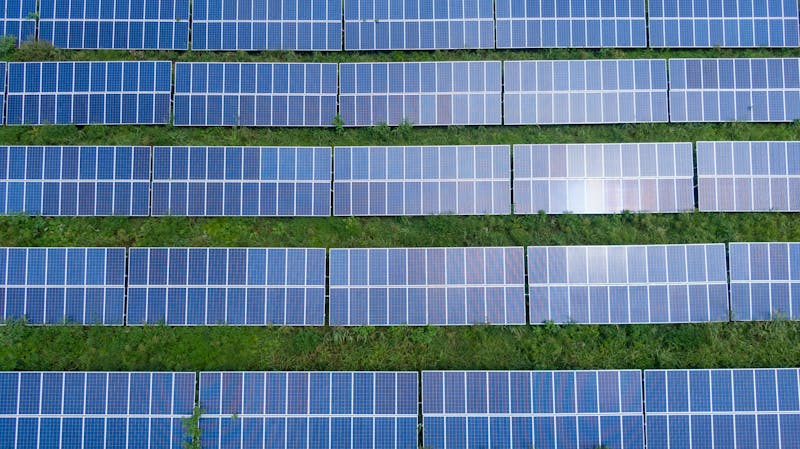
Solar PV Panel Grants
Financial support for installing solar photovoltaic panels on your property, reducing electricity bills and carbon emissions.
Eligibility Criteria
- UK homeowners and landlords
- Properties with suitable roof space and orientation
- No previous solar PV installation under this scheme
Key Benefits
- Depends on the scheme and nation
- Reduced electricity bills by generating your own power
- Lower carbon footprint
- Potential income through Smart Export Guarantee

ECO4 Scheme
Government scheme providing funding for energy-efficient home improvements for low-income households, including solar panel installation.
Eligibility Criteria
- UK homeowners and private tenants (with landlord permission)
- Recipients of qualifying benefits (Universal Credit, Pension Credit, etc.)
- Properties with EPC rating of D or below
Key Benefits
- A package of measures, supplier-funded to 31 Dec 2026
- Includes solar panels, insulation, and heating system upgrades
- Significant reduction in energy bills
- Improved home comfort and energy efficiency

Smart Export Guarantee (SEG)
Earn money by selling excess electricity generated by your solar panels back to the grid.
Eligibility Criteria
- UK homes and businesses with solar panel installations up to 5MW
- Must have a smart meter or export meter installed
- System must be MCS certified (or equivalent)
Key Benefits
- Payment for surplus electricity exported to the grid
- Rates vary by supplier; the better fixed rates are around 12–13p per kWh (October 2026)
- Additional income stream from your solar installation
- Encourages efficient use of renewable energy
Home Upgrade Grant (HUG): closed
Financial assistance for energy efficiency improvements in low-income households not connected to mains gas.
Eligibility Criteria
- UK homeowners and private tenants in properties off the gas grid
- Homes with an EPC rating of D, E, F or G
- Low-income households or those vulnerable to fuel poverty
Key Benefits
- Closed: replaced by Warm Homes: Local Grant in England
- Includes solar PV, heat pumps, insulation, and more
- Improved warmth and comfort at home
- Reduced energy bills and carbon emissions
How to Apply for Solar Power Grants
Check Eligibility
Use our eligibility checker to determine which grants you may qualify for based on your property, income, and situation.
We Reply by Email
We reply by email with the schemes that match your answers and who runs each one.
Grant Application
You apply to the organisation that runs each scheme, such as an energy supplier, its installer or your council; no one can guarantee approval.
Installation & Certification
If you go ahead, check the installer on the MCS register: MCS certification is what keeps you eligible for the Smart Export Guarantee.
Ready to Explore Your Grant Options?
Use the free check to see which UK solar grants apply to your property, then decide with the full picture in front of you.
Check EligibilitySolar Panel Grants UK: The Complete 2026 Scheme Comparison
If you are searching for solar panel grants, the honest answer is that the UK does not have one single "solar grant" you simply apply for. Instead, several schemes, run by energy suppliers, councils and the devolved governments, can fund or part-fund solar PV depending on who you are, where you live, your income or benefits, and your property's energy rating. We are an independent, supplier-neutral service, so the table below lays out the main routes side by side rather than steering you toward any one installer's offer.
Use it to find the scheme that matches your situation, then run a free eligibility check. Figures are typical ranges and rules change frequently, so we hedge specifics deliberately and never promise approval.
The standout points worth knowing before you read: ECO4 is benefits-linked and can fully fund suitable measures including solar, but only runs until 31 December 2026; Scotland offers solar PV as an interest-free loan rather than an outright grant; and the Smart Export Guarantee is not a grant at all, but ongoing payment for the electricity you export.
What Government Grants for Solar Panels Actually Cover
Most government grants for solar panels are aimed at lower-income or fuel-poor households, or at improving the worst-rated homes, rather than at every property owner. That is the single most important thing to understand. The schemes were designed to cut energy bills and carbon for those who need it most, with solar PV usually funded as part of a wider package of energy-efficiency measures.
In practice this means three broad groups tend to qualify for the fully or part-funded routes: households receiving qualifying means-tested benefits (the typical ECO4 path); homes in England with a low EPC rating and a lower income (Warm Homes: Local Grant, which replaced the closed Home Upgrade Grant); and households flagged by their local council under flexible eligibility rules even without benefits. If none of those fit you, solar is still very worthwhile financially, you would simply fund it yourself and earn from exporting surplus power through the Smart Export Guarantee.
A typical 3-4kW domestic system costs around £5,000-£9,000 before any funding, so even partial support changes the maths considerably. We never guarantee a grant will be approved, but a quick eligibility check is free and tells you which doors are genuinely open to you.
Solar Grants Nation by Nation: England, Scotland, Wales & Northern Ireland
The UK's devolved nations run their own energy schemes, so what counts as a solar grant in one nation may not exist in another. Getting this wrong is the most common mistake we see on competitor pages, so here is the accurate breakdown.
England. The main routes are ECO4 (benefits-linked, EPC D-G, can fully fund suitable measures including solar) and Warm Homes: Local Grant, run by councils, for homes rated EPC D to G with a household income usually up to £36,000 (it replaced the closed Home Upgrade Grant). The Great British Insulation Scheme closed on 31 March 2026.
Scotland. This is the big distinction: Home Energy Scotland typically offers standalone solar PV as an interest-free loan of up to £5,000, listed for hybrid solar PV-T panels, not a grant. Grant funding and rural uplifts apply to measures like heat pumps and insulation. Warmer Homes Scotland can fully fund measures for eligible low-income or vulnerable households.
Wales. The Nest / Warm Homes Wales scheme provides free energy-efficiency measures to eligible households. Warm Homes: Local Grant is England-only.
Northern Ireland. ECO4 is a GB-only scheme and does not run in NI. The main route is the Housing Executive's Affordable Warmth Scheme (insulation and heating, not solar PV). The Smart Export Guarantee is not a formal scheme in NI, though export payments may be available via supplier arrangements.
LA Flex (ECO Flex): How to Qualify for Solar Funding Without Benefits
One of the most overlooked routes to a solar panel grant is LA Flex, also called ECO Flex or flexible eligibility. It widens the door to ECO4 funding for households who do not receive qualifying benefits but are still vulnerable to cold or high energy costs. This is where many people who assumed they would not qualify actually do.
Under LA Flex, your local authority sets the criteria and issues a declaration that allows you onto the scheme. The common routes councils use include an income route (household income below a threshold the council defines), a health-condition route (where a cold home worsens a resident's condition, such as respiratory, cardiovascular or limited-mobility conditions), and a proxy route (where you meet other vulnerability indicators set nationally or locally).
Because each council publishes its own Statement of Intent, the exact thresholds and accepted conditions vary from area to area, and we will never invent a specific figure for your council. What we can do is help you identify whether your local authority operates a flexible eligibility route and what it generally requires. If a benefits-based application is a non-starter for you, LA Flex is the first alternative worth checking.
Why Use an Independent Solar Grant Service Instead of an Installer
Most pages ranking for solar panel grants uk are published by installers or energy companies whose underlying goal is to sell you their own installation. There is nothing wrong with that, but it means their "grant guide" only ever points to schemes they can profit from, and tends to skip the routes that do not suit their business.
We are different by design. As an independent, supplier-neutral service we cover every route across all four UK nations, including the ones where the right answer is a loan, a council-run scheme, or simply self-funding plus export income. We have no installer to push and no scheme we are paid to promote, so we can tell you plainly when you probably will not qualify, which a vendor rarely will.
That independence is the whole point. You get the full picture of solar funding options, an honest read on your likely eligibility, and a free check with no obligation. If a grant route is open to you, we will help you pursue it; if it is not, we will say so and explain the alternatives.
| Scheme | Who it is for | What you typically get | Nation | How to apply |
| ECO4 | Households on qualifying means-tested benefits; homes rated EPC D-G | Fully-funded suitable measures, which can include solar PV, as part of a wider upgrade (no published flat cash cap) | England, Scotland, Wales (GB only, not NI) | Via an energy supplier, its installer or your council; runs until 31 December 2026 |
| LA Flex (ECO Flex) | Lower-income or vulnerable households without benefits | Opens ECO4 funding via a council declaration (income, health-condition or proxy route) | England, Scotland, Wales | Through your local authority's flexible eligibility route |
| Great British Insulation Scheme | Broader households, including a council-tax-band route | Mainly insulation; complements solar by cutting overall demand | England, Scotland, Wales | Via obligated suppliers after eligibility check |
| Home Upgrade Grant (HUG2): closed | Closed to applications | Replaced in England by Warm Homes: Local Grant (council-run; EPC D to G; income usually up to £36,000) | England only | Apply for Warm Homes: Local Grant on gov.uk |
| Home Energy Scotland | Scottish homeowners adding solar PV | Interest-free loan up to £5,000, listed for hybrid solar PV-T panels for solar PV (a loan, not a grant) | Scotland | Apply via Home Energy Scotland |
| Warmer Homes Scotland | Low-income / vulnerable Scottish households | Fully-funded eligible measures | Scotland | Referral via Home Energy Scotland |
| Nest / Warm Homes Wales | Eligible Welsh households | Free energy-efficiency measures | Wales | Apply via the Nest scheme |
| Affordable Warmth | Eligible Northern Ireland households | Energy-efficiency support (ECO4 does not operate in NI) | Northern Ireland | Via your local Health Trust / NI suppliers |
| Smart Export Guarantee (SEG) | Anyone with an MCS-certified solar system | Ongoing payment for exported electricity (not a grant); rates vary by supplier | Great Britain (informal in NI) | Apply to a licensed SEG-tariff supplier |
Frequently asked questions
Is there a government grant for solar panels in the UK?
There is no single universal solar grant, but several schemes, run by energy suppliers, councils and the devolved governments, can fund or part-fund solar PV. ECO4 (benefits-linked) can fully fund suitable measures including solar, and in England Warm Homes: Local Grant, run by councils, can fund solar panels for eligible homes (it replaced the closed Home Upgrade Grant). Scotland offers solar PV as an interest-free loan rather than a grant. Eligibility depends on income, benefits, location and your EPC rating, so a free check is the best starting point.
Can I get free solar panels through a grant?
Some households can have solar PV fully funded as part of a wider package, typically through ECO4 if you receive qualifying means-tested benefits and your home has an EPC rating of D to G. LA Flex may open the same route without benefits. There is no published flat cash cap we can quote, and approval is never guaranteed, so we encourage a free eligibility check to confirm whether you qualify.
What solar grants are available in Scotland?
Scotland works differently from the rest of the UK. Home Energy Scotland typically offers standalone solar PV as an interest-free loan of up to £5,000, listed for hybrid solar PV-T panels, not an outright grant. Grants and rural uplifts generally apply to other measures such as heat pumps and insulation. Warmer Homes Scotland can fully fund measures for eligible low-income or vulnerable households. We never claim a standalone HES solar PV grant exists, because it does not.
Does ECO4 cover solar panels and when does it end?
Yes, ECO4 can fund solar PV where it is a suitable measure for your property, as part of improving a low-rated home. It is benefits-linked, applies to homes rated EPC D to G, and can fully fund qualifying measures. ECO4 runs until 31 December 2026, and LA Flex can widen eligibility beyond standard benefits. Rules change, so check your eligibility sooner rather than later.
What is the Smart Export Guarantee and is it a grant?
The Smart Export Guarantee (SEG) is not a grant. It is a scheme requiring licensed electricity suppliers in Great Britain to pay you for surplus solar electricity you export to the grid. Rates vary by supplier, and you usually need an eligible smart or export meter and an MCS-certified installation. In Northern Ireland the SEG is not a formal scheme, though export payments may be available through supplier arrangements.